Irish Is Not A Dead Language: Why Millions Still Engage With Gaelic

Author
Many people wrongly assume that Irish is a thing of the past.
The truth is that Irish is a living, breathing language used by people every single day.
It has survived centuries of historical challenges to remain an important part of modern culture.
Today, millions of people interact with the Irish language globally.
I’ll explain exactly why Irish is far from dead and how it continues to thrive today.
Table of Contents:
What defines a dead language?
A dead language is one that no longer has any native speakers.
Latin is a classic example of a dead language.
While people still study Latin in school, nobody speaks it as their first language at home.
Irish doesn’t fit this description at all.
Irish is an official language of the Republic of Ireland and the European Union.
It’s passed down from parents to children in homes across Ireland.
Linguists classify Irish as an endangered language, not a dead one.
This means it needs ongoing protection, but it absolutely still has an active native speaking population.
How many people actually speak Irish?
The latest census data shows that over 1.8 million people in the Republic of Ireland claim some ability to speak Irish.
This represents about 40% of the country’s population.
Of course, not all of these people are fluent daily speakers.
About 71,000 people speak Irish daily outside of the standard education system.
Many more use it weekly or regularly in social settings.
There are also thousands of active speakers in Northern Ireland and in diaspora communities around the world.
The strong Gaeltacht communities
The true heart of the Irish language lives in the Gaeltacht regions.
These are designated areas in Ireland where Irish remains the primary community language.
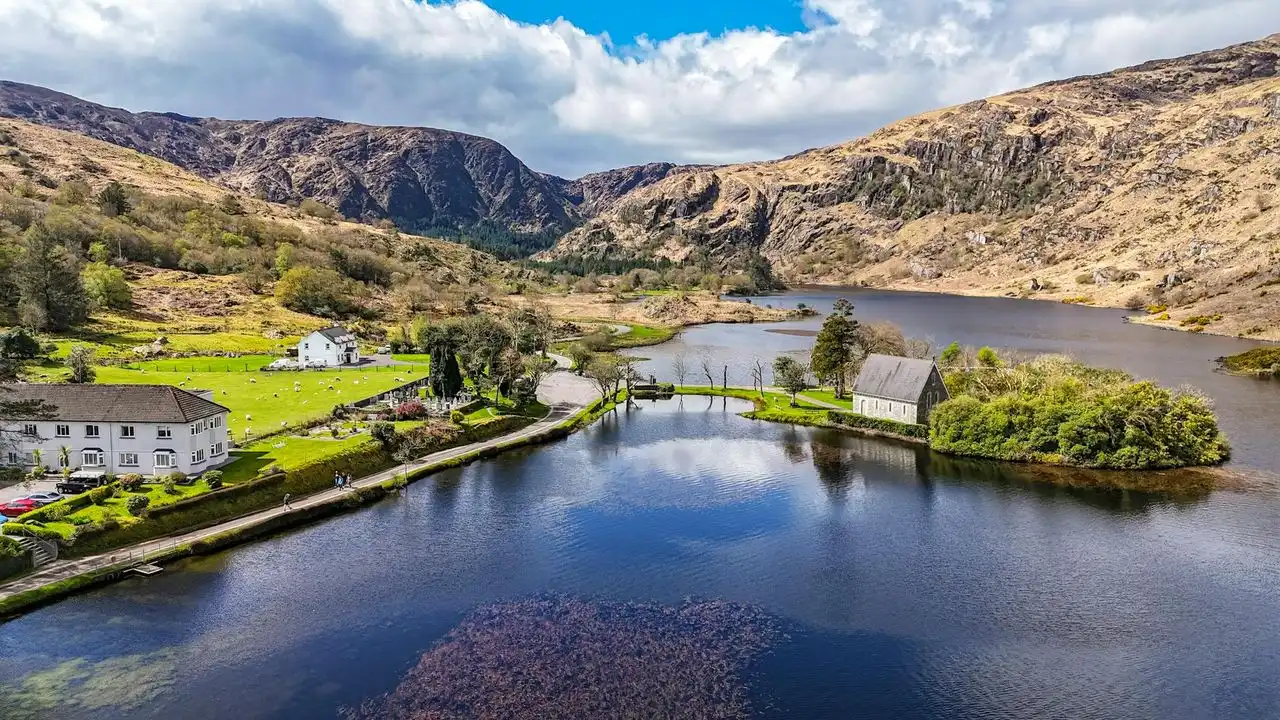
You’ll find these communities mostly along the rugged western coast of Ireland.
Areas in Donegal, Galway, Kerry, and Cork have strong Gaeltacht populations.
Each of these regions has its own distinct dialect and regional variations.
The Irish spoken in Donegal sounds quite different from the Irish spoken in Kerry.
People in these areas live their daily lives entirely through the Irish language.
They buy groceries, attend church, and chat with neighbors in their native tongue.
Let’s look at a simple everyday greeting to see how the language looks in action.
Dia dhuit, conas atá tú?
Modern media and pop culture
Irish is highly visible in modern media and entertainment.
Ireland has a dedicated national television broadcaster called TG4 that operates entirely in Irish.
There are also national radio stations like RTÉ Raidió na Gaeltachta broadcasting daily.
You can easily find Irish language podcasts, YouTube channels, and popular social media accounts.
Irish language cinema has also seen a massive global revival in recent years.
The movie An Cailín Ciúin (The Quiet Girl) was recently nominated for an Academy Award.
Modern music artists are writing hit songs in Irish and performing at massive festivals.
The language is adapting perfectly to the digital age.
The worldwide push to learn Irish
Interest in learning Irish has exploded around the world.
People with Irish ancestry want to connect deeply with their roots.
Language enthusiasts are simply drawn to the unique Celtic structure of the language.
If you want to start speaking the language, you can join our community at Talk In Irish.
There are also pop-up Gaeltacht events happening in major cities from New York to Melbourne.
People gather at these events to drink coffee or pints and speak whatever Irish they know.
Here are a few common phrases you might hear at these social gatherings.
| English | Irish | Pronunciation |
|---|---|---|
| Cheers! (Health) | Sláinte! | Slawn-cha |
| Thank you | Go raibh maith agat | Guh rev mah ah-gut |
| Excuse me | Gabh mo leithscéal | Gow muh lesh-shkale |
Irish is clearly a language of the future, not just the past.
Millions of people will continue to engage with Gaelic for generations to come.